

Hand-woven carpets have been an interesting element for humanity since ancient times. Hand-woven carpets have become interesting in ancient times due to their ability to protect people from various dangers such as dirt, cold, and insects. Nowadays, these carpets, beyond their practical functions, take us on a historical journey, the durability provided by the hand weaving technique and the variety of threads used, the ability to produce freely in desired sizes, the unlimited variety of dyes used, and the fact that the materials such as yarn and dye used in their production are obtained by natural means, thus avoiding carcinogenic effects. It continues to attract attention with its features such as being purified.
The world's largest carpet came into existence thanks to one of the interesting features of these hand-woven carpets.
Features of the World's Largest Carpet
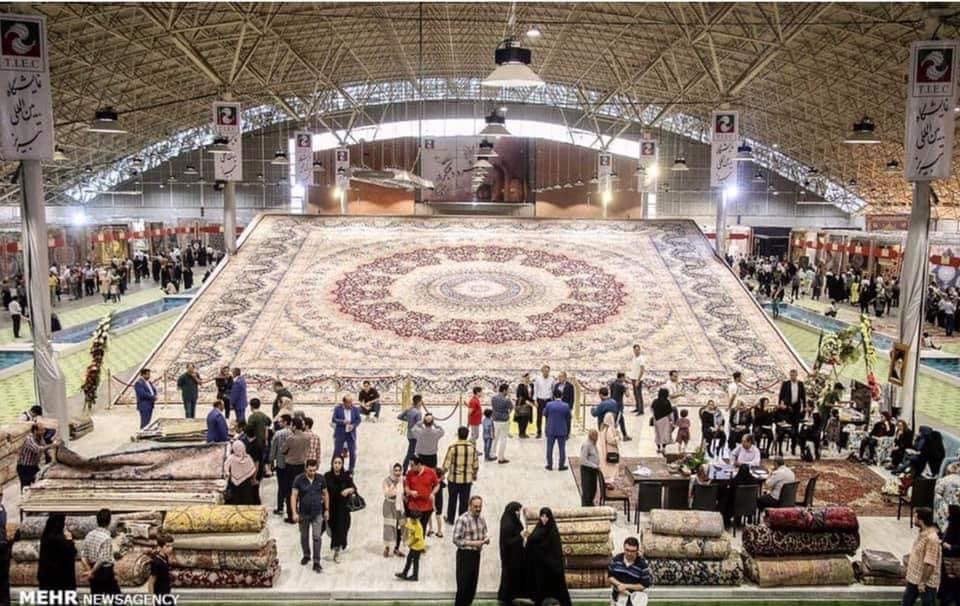
The patterns on the surface of the carpet consist of geometric motifs such as large circles, making the world's largest carpet even more attractive for carpet enthusiasts who love geometric patterns. In addition, it has the feature of ethnic carpet thanks to its unique motifs.
Hand-Knotted Carpets and Sustainability
Hand-woven carpets stand out with their longevity compared to synthetic types. However, they can last much longer than other synthetic alternatives. However, in order to maintain this durability, necessary care must be taken during the use and cleaning of carpets. In addition, while the passing years increase the brightness of hand-woven carpets, the carpet has the ability to protect itself by processes such as trimming a certain amount of fluff when faced with possible complicated situations.


