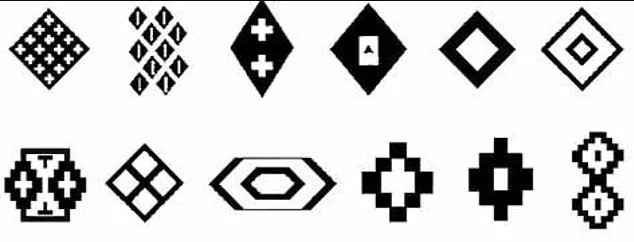
Cultural symbols and motifs, passed down from generation to generation and continuing to this day, are actually indicators of the beliefs, stories, and various rituals of the society they inhabit. Turkish society, influenced by the influence of a nomadic lifestyle, transformed weaving into an art form, and rug motifs and their meanings have persisted as important cultural values in Turkish culture to this day.
In Turkish weaving, which we can also call nomadic art, it can be said that the motifs woven on carpets and rugs are symbols representing different beliefs and giving information about the lifestyles of that period.
The symbols and icons on carpets and rugs are called MOTIFs, and all of them are called PATTERNS.
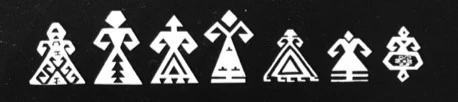
HAND-ON-WAIST MOTIF:
It is the symbol of femininity. It symbolizes not only motherhood and fertility, but also luck, abundance, fortune, happiness, and joy.
The hands-on motif used in today's textiles, which is a continuation of the mother goddess cult, is an indication of the fact that the belief in the mother goddess has come down to us as a cultural heritage.

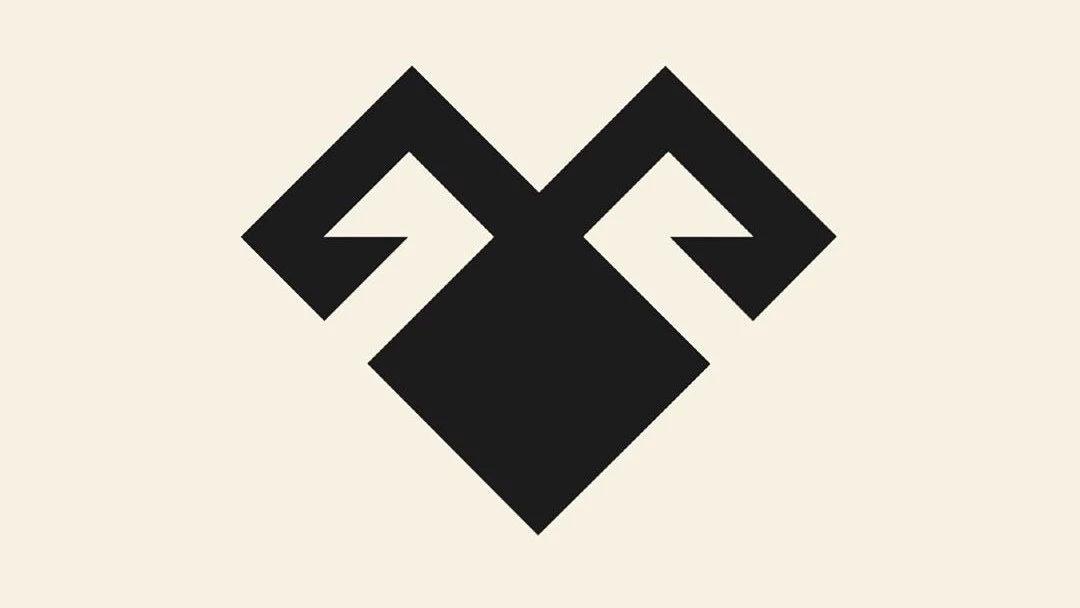
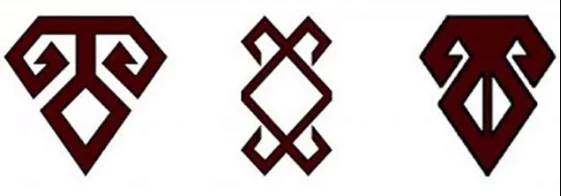
RAM'S HORN:
The ram's horn motif is a symbol of fertility, heroism, masculinity, and power. In Anatolian culture, it is a motif used after or in conjunction with the mother goddess. Throughout human history, the horn symbol has been associated with men, a symbol of strength and power.
The finest examples of animal symbols in Turkish decorative art are seen on tombstones featuring ram, sheep, or mountain goat statues. Ram horn motifs are common in Anatolia today, as are carpets and kilims.
ABUNDANCE
Group 1: These are fertility motifs that express eternity and happiness in the group consisting of mulberry, watermelon, melon, grape, fig, pomegranate plants and animals such as butterflies, fish, deer, ram, bull, snake and dragon.
Group 2: Consists of tree leaves and pomegranate motifs. The tree of life symbolizes fertility and abundance, while the pomegranate represents abundance.
3rd Group: It consists of rocks, water, mountains and some natural phenomena.
PERSON
It tells the story of the person who weaves these figures, their wish to have a son or their lover who they miss abroad.
HAIR TIE
It's a sign of young girls' desire to get married. Young women who want to get married cut their locks and braid them in a single braid. Newlyweds braid their hair in two braids and trim their locks. They tie colored threads to the ends.
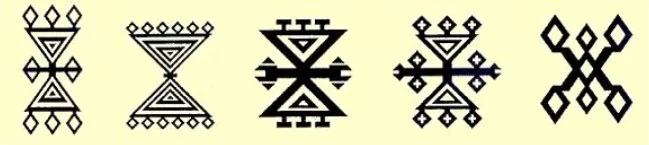
EARRING
Motifs found at Çatalhöyük indicate that young girls wore earrings to indicate their desire for marriage. Men have also been identified as wearing earrings. Merchants of that era wore earrings in the right ear to symbolize their professional proficiency. Sultans, dervishes, and women also wore earrings.
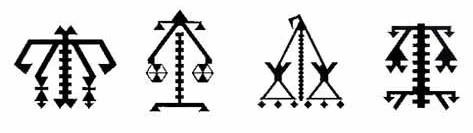
BUTTERFLY
The name of the iron chain attached to a horse's front two legs to prevent it from escaping from the pasture. It symbolizes family continuity and symbolizes love and union. The red ribbon used to tie engagement rings is another such symbol.

waterway

Water is a symbol of a new beginning, physical and spiritual renewal, the continuity of life, nobility, wisdom, purity, and virtue. It is the most effective symbol of purification. The waterway symbolizes both life and death. In Anatolia, water is life itself. Water, with which Anatolian women live all day, has become a motif in their weavings. Water symbolizes life.
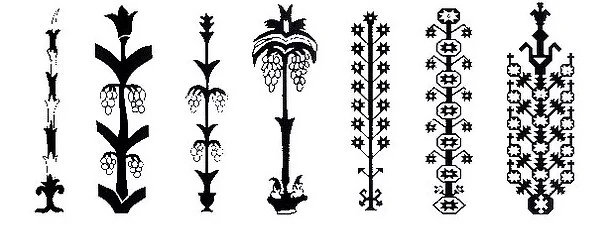
TREE OF LIFE
The Tree of Life embodies the vertical symbolism of life, constantly evolving and growing, rising toward the heavens. In a broader sense, it represents life in a constant state of development and change. It unites three important elements of the universe: the underground with its roots reaching deep into the earth, the sky with its lower branches and trunk, and the heavens with its upper branches rising toward the light. It symbolizes the connection between earth and heaven.
Trees symbolize rootedness and permanence because they root, settle, and grow in a specific area. They symbolize life, beauty, eternity, simplicity, the immortality of the universe, and the axis of the earth.
SNAKE
In Anatolian weavings, the snake motif has been understood and interpreted as a zigzag (meander), cloud and dragon.
The snake has been considered a sacred creature in Anatolia since ancient times, and has been treated with a mixture of fear and respect. The double-headed snake, a symbol of medicine, is symbolized alongside poison and antidote.

SCORPION
The scorpion motif is one of the motifs used to protect against evil spirits. This motif represents the spirit of Satan. The scorpion, always waiting to kill, is a symbol of malevolence and unprovoked conflict. Anatolian people use woven rugs in their homes, which would be difficult for a scorpion to walk on.
The scorpion motif is used on the ground and in the outer border decorations.
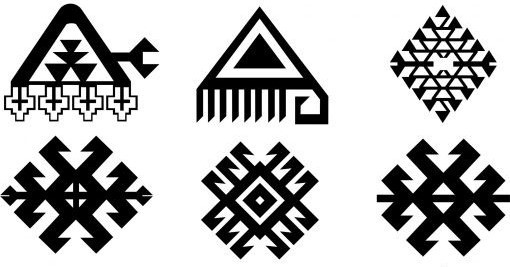
BIRD
Birds have become a part of Anatolian people's daily lives. In Anatolian symbolism, the bird holds many meanings. Sometimes, the bird is thought to represent love, the beloved, and sometimes, the spirit of the deceased. The bird is identified with women. It is sacred, symbolizes longing, and heralds good news.

STAMP IM
Throughout history, Turks have used certain symbols, or "im" (stamps), to demonstrate their power, such as family, tribe, clan, and state. These symbols are indicators of the authenticity of a person and a society. These symbols ensure the continuity of lineage and family name, as well as the preservation of family treasures. Knowing the culture of each designed textile makes it easier for future generations to learn.
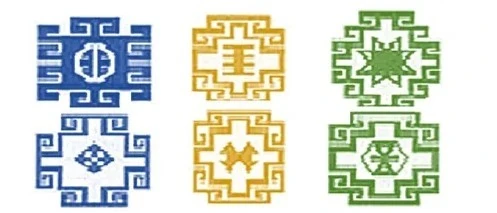
EYELASH
The human eye can cast both benevolent and malevolent glances. It is believed that the eye itself, which casts these malevolent glances, is the one carrying the evil eye. The eye motif, considered a ward off the evil eye, is often seen in textiles, particularly around or within ram's horns, hands on hips, and abundance motifs.