

More than just decorative elements in a home, rugs are the woven forms of centuries-old cultures, stories, and beliefs. These rugs, especially the rich motifs found in hand-woven rugs , have carried numerous symbolic meanings throughout history. So, what are the rug motifs and their meanings?
The Meaningful World of Carpet Motifs
Carpet motifs and their meanings reflect the rich patterns and history behind each motif. These motifs, frequently found in traditional hand-woven carpets, have carried various symbolic meanings for centuries. These symbolic meanings also express the beliefs, emotions, and lifestyles of the people.
Hands on Hips Motif
 Select Image
The "hands on hips" motif is a prominent motif frequently encountered in Turkish carpets and rugs. This motif typically represents the strong and independent nature of female figures and symbolizes motherhood, femininity, and fertility. The female figure with her hands on her hips reflects a woman's power, freedom, and creativity within the home.
Scorpion Motif
The scorpion motif is a protective motif symbolizing danger and malevolence. It is often used on hand-woven carpets and rugs to ward off harmful creatures. It also holds a significant place in folk beliefs.
 Select Image
Tree of Life Motif
 Select Image
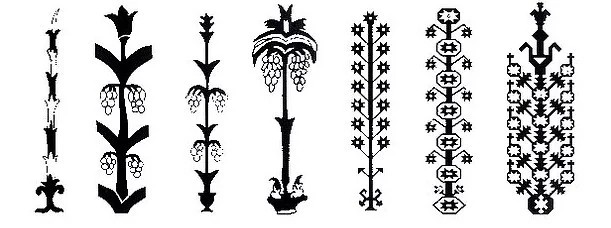
The tree of life motif represents the continuity of life, the renewal of nature, and universal connection. This motif is often used as a depiction of a vertically growing tree, and details such as the tree's trunk, branches, and leaves are meticulously crafted in carpets and rugs.
The Meaning of Nature Motifs
Nature motifs are used in a wide range of rug designs. Flower and leaf motifs reflect the vibrancy and beauty of nature; bird motifs reflect the natural world; and animal motifs reflect the richness of nature. These motifs are used in both traditional and modern rug designs, emphasizing the continuous cycle of nature and life.
 Select Image
Regional and Cultural Symbols
Regional carpet patterns reflect the unique cultural symbols and history of each region. These patterns are inspired by the geography, history, and daily life of that region. For example, the Shadow pattern in Anatolia symbolizes universal harmony and balance, while the Urartian pattern in Eastern Anatolia symbolizes ancient civilization. These patterns demonstrate that the carpet is not merely a floor decoration; it also tells a cultural story.
 Select Image
Conclusion
Carpet motifs carry the stories and cultural values of the past into the present through the art of weaving. The motifs of each hand-woven carpet are not only aesthetic embellishments but also embody the profound meanings of societies, beliefs, and histories. This rich collection of motifs reflects the timeless beauty of art and culture whenever one examines the carpet motifs and their meanings.


