

Today, the principle of returning to the past and valuing the old has also manifested itself in home decor trends. In addition to what we call "vintage," decorating trends that combine traditional and modern styles, those that emphasize traditional objects have also become quite popular recently.
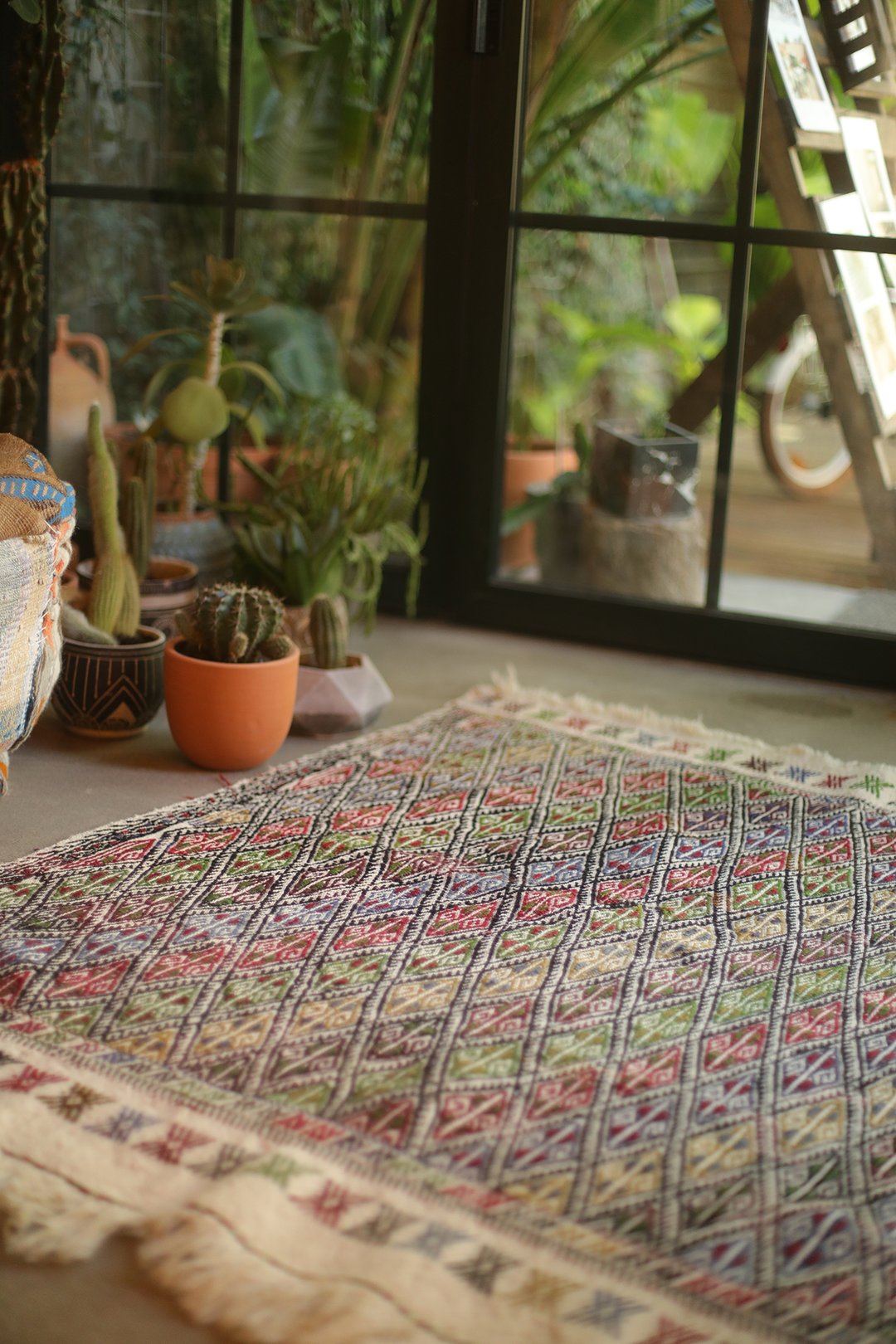
Rugs are undoubtedly one of the most popular objects for those seeking to create a traditional style of decoration in their homes. Rugs are not only a home decoration item but also a cultural transmission tool. Rugs are a significant cultural object in Turkish culture and the lifestyles of Turkish societies, and through their symbols and motifs, traces of the beliefs and rituals of the society in which they are located are traced, representing the art of weaving.
Archaeological excavations and historical evidence regarding the emergence of societies and the transition to social life reveal that the Turks are one of the world's oldest societies. Weaving, defined as a nomadic society and initially presented as a nomadic art, has become a virtual art form in Turkish societies. The rug, a significant decorative element in Turkish culture and societies, has always been present in the daily lives of Turkish societies, with rug motifs and styles varying from region to region.
So, what is a rug? What are its characteristics? What are the different hand-woven rug styles? What do rug motifs mean? Here's everything you need to know about rug styles and motifs.
What is a Kilim? What are the features of a Kilim?
The rug, which holds a significant place in Turkish weaving, is made using a two-thread system. A hand-woven rug is a two-sided fabric with no back or back, and most importantly, it is lint-free. This feature makes hand-woven rugs suitable for home decor, even for those with allergies.
When we look at the origin of the word rug , it is known that its origin is Persian and from this language it passed into Urdu and Turkish.
Which Regions Do Kilim Motifs Belong To?
Symbols, which reflect shared values within society and throughout its historical processes, have been written and drawn in both abstract and concrete forms throughout history, thus enabling the process we call cultural transmission. In Turkish carpet and kilim art, the drawings that facilitate cultural transmission and reflect the social life of the region are called "motifs." While kilim motifs can convey meaning on their own, they can also create a narrative when combined.
If we want to learn about and comment on the lifestyle and culture of Turkish societies, we need to examine the art of weaving in more detail. It's essential to understand the meanings of rug motifs within hand-woven rug models and the region they originate from.
So, what are the most commonly used symbols in rug motifs? What are the meanings of the hand-woven rug motifs used by the Turks? Which region do the rug motifs originate from?
 Select Image
Scorpion Motif
The scorpion motif is one of the most frequently used motifs in Turkish weaving in hand-woven rugs and carpets. The scorpion motif's frequent use in hand-woven rugs is due to its symbolism of death. The early emergence of Turkish societies, their nomadic lifestyle, and their vulnerability to external threats brought the scorpion motif to the forefront of weaving. The scorpion motifs woven into hand-woven rugs and carpets are believed to protect Turkish tribes from death and external evil, offering insights into the lifestyle of Turkish society at that time.
Fertility Motif
The abundance motif, a common motif in Turkish rugs, is interpreted in three different ways, along with the objects woven around it. First, if the abundance motif is accompanied by fruits such as mulberries, watermelons, melons, pomegranates, and figs, or animals such as rams, bulls, deer, and fish, it signifies eternal happiness and family. Another interpretation is a pattern created by combining tree, flower, and leaf motifs alongside the abundance motif. In this combination, the abundance motif is depicted as a symbol of abundance and good luck. The final interpretation features a composition featuring the abundance motif and inanimate rocks, water, and mountains. In this composition, the abundance motif represents the universe and nature.
 Select Image
Dragon Motif
The dragon motif used in hand-woven rugs is generally used to symbolize abundance. In Turkish weaving, the dragon motif symbolizes the balance of air and water.
Pastel Motif
When we examine the meanings and regional characteristics of rug motifs, one of the most frequently encountered motifs in Turkish weaving is the boukağı motif. Thought to represent family unity and a modern-day adaptation of the Old Turkish word "bukagu," the boukağı motif represents family continuity and lovers loving each other.
Hand / Finger / Comb Motif
The hand or comb motif, woven in five, three, or seven patterns, can carry different meanings in Turkish weaving and among traditional rug motifs. Among rug motifs, the hand motif represents human strength and productivity, while the finger motif can be interpreted as protection against the evil eye.
Hands on Hips Motif
Among the hand-woven rug motifs, one of the most frequently used in Turkish weaving is the "hands on hips" motif. The "hands on hips" motif represents femininity. This motif, particularly common in Anatolia, also signifies a bride or a girl with a child.
Deer Motif
The deer motif, which we encounter among hand-woven rugs and carpet motifs, represents wisdom and the power received from nature.
Eye Motif
The eye motif, a common motif in rugs, holds a special place among traditional Turkish rug motifs. Rugs with eye motifs, believed to protect the area and its inhabitants from evil-eyed people, are generally woven in blue.
Bird Motif
The bird motif, which is among the traditional Turkish rug motifs, represents the expected news from someone you miss or a fruitful life.
Waterway Motif
The waterway symbol, found among the traditional hand-woven rug motifs in Anatolia, carries the meaning of rebirth.


