

Art Director Serhat Kula, known for his active work in the fields of culture and arts, drew attention to the Genocide in Gaza with his unique artistic language.
The 105 carpets in the work represent the burned and damaged woven carpets from demolished homes in Gaza. The artist uses art to reveal the pain and destruction in the region.
breakLineThe block can not be displayed correctly.
Carpet is an ancient language in which human beings express their contact with each other, their feelings and emotions through weaving.
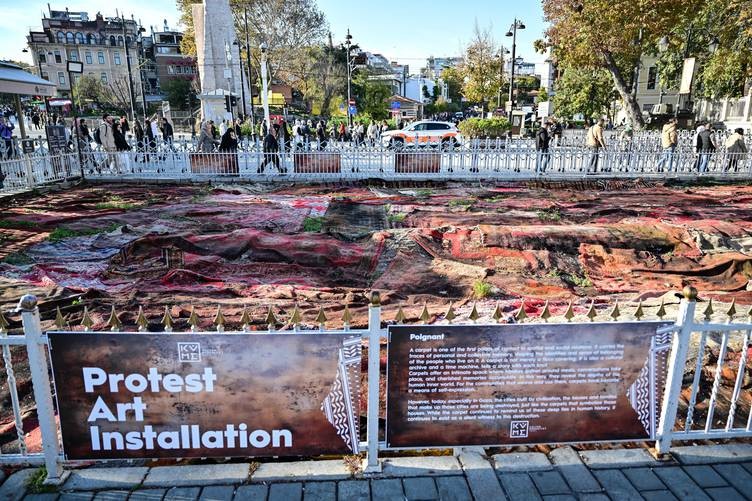 Carpet is an ancient language in which human beings express their feelings and emotions through weaving. Select Image
Kula defines the hand-woven carpet not merely as an object, but as an expression of the first contacts and feelings in human history. Carpets carry collective memory and cultural heritage. By displaying this heritage with specially hand-woven carpets selected from Anatolia and the Balkans, Kula concretely reflects the genocide in Gaza. "Just like the soil of a homeland, the soil of a home is also comprised of carpets," says the artist, emphasizing that carpets are not merely aesthetic but also a geographical memory.
The most striking aspect of the work is the natural, carefully damaged nature of the hand-woven carpets , designed to give the impression of having emerged from a battlefield. Kula aims to transcend the intimate images we see on digital screens and bring this pain to the viewer's attention more intensely through art.
breakLineThe block can not be displayed correctly.
This installation can be characterized not only as a work of art, but also as an act of peace activism.
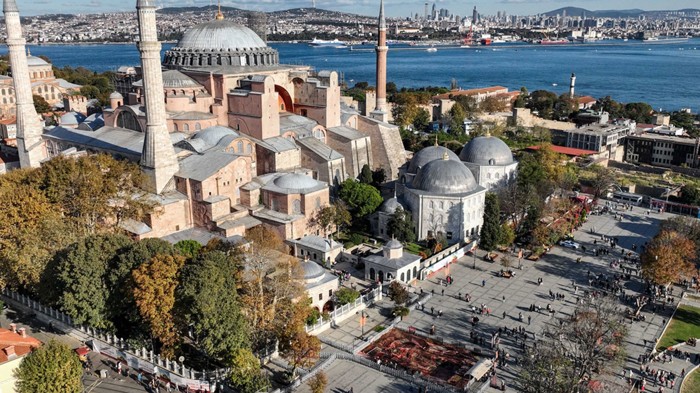 This installation can be described not only as a work of art but also as an act of peace activism. Select Image
With this work, the artist aims to touch the hearts of art lovers as well as all segments of society in the face of the human tragedy.
Ultimately, the 105 carpets in Kula's work not only reflect the suffering of Gaza but also keep the ancient textile culture alive. Such projects once again demonstrate the power and impact of art, fostering profound social awareness. The work's emphasis on the culture of hand-woven carpets demonstrates once again that carpets carry not only visual but also cultural and emotional significance.


