

Hand-woven rugs, which adorn our living spaces, add color, and create a sense of warmth, hold a significant place in human history. Undoubtedly, hand-woven rugs, the product of thousands of threads and labor woven countless times, continue to stand out.
Hand-woven rugs are environmentally friendly because they are made from organic materials like wool, cotton, and yarn. Their durable structure also ensures their longevity.
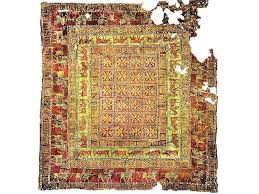
While each weaving process can be considered a work of art, these carpets also preserve and reflect the cultural heritage of a community. The Pazyryk Carpet is considered the oldest of the hand-woven carpets, part of a living artistic tradition.
Main Known Features of the Pazyryk Carpet
The Pazyryk Carpet, considered the world's oldest woven wool carpet, measures 183 x 200 cm. Tests on the Pazyryk's surface indicate that it was woven in the 5th century BC.
 Select Image
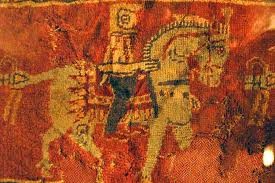
The technique used in weaving the 2,500-year-old Pazyryk Carpet, with its 36 symmetrical loops per centimeter, suggests a long history of weaving evolution. The carpet has a red central background, surrounded by motifs of deers and men riding horses.
 Select Image
Persian Carpet Tradition
Persian carpets have a long tradition. For many years, Iranian weavers have hand-woven carpets passed down from generation to generation. This tradition features village rugs, regional ethnic motifs, woolen rugs, geometric patterns, and vintage rugs.
The geometric patterns found in old hand-woven rugs are a sign of an interest in aesthetics even years ago. Furthermore, these geometrically patterned rugs offer a diverse range of styles.


